
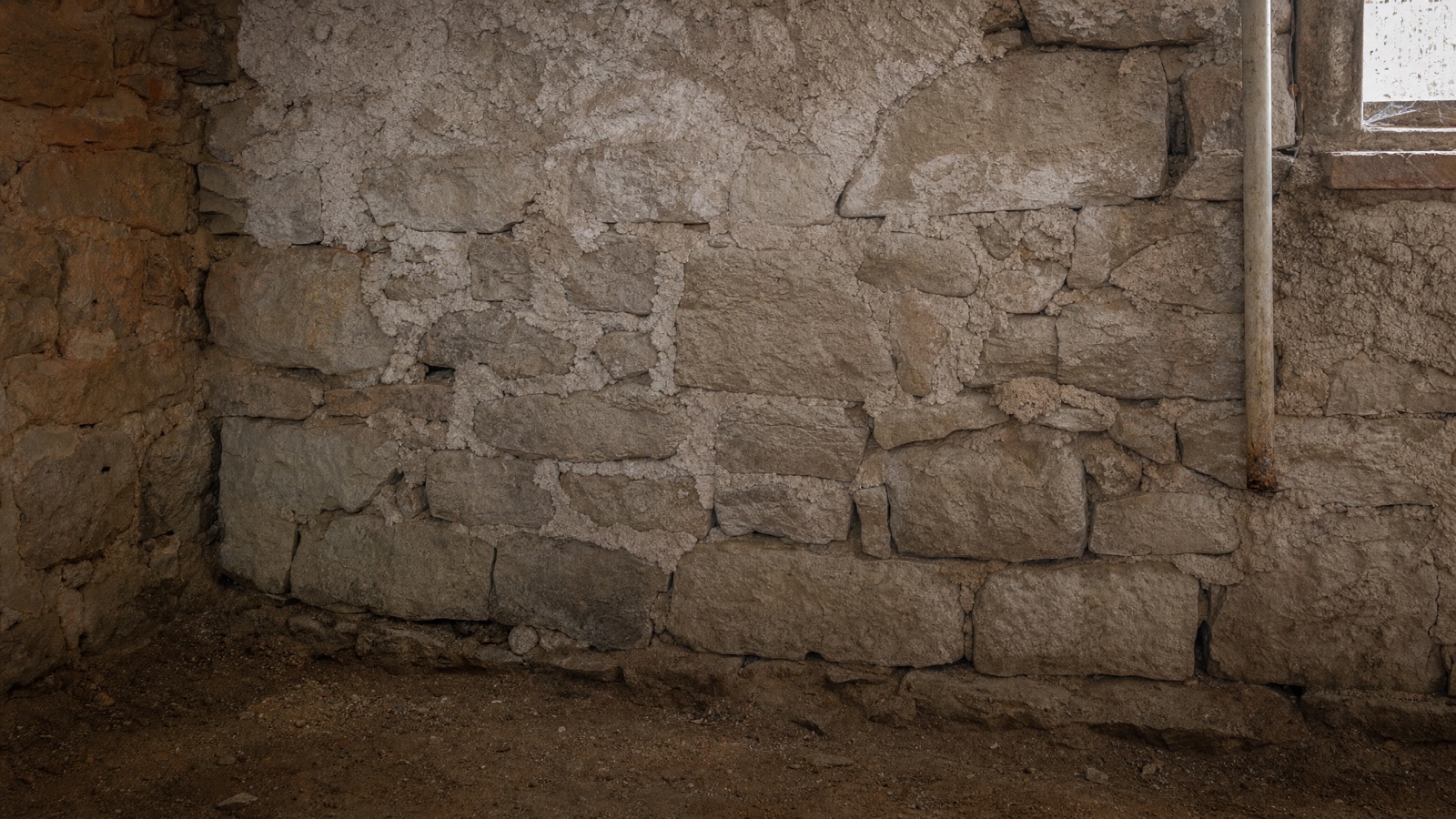
Stillwater is one of Minnesota’s oldest cities, and its housing stock reflects that history. Neighborhoods climbing the bluffs above the St. Croix River are full of homes built in the late 1800s and early 1900s, many of them sitting on foundations that predate modern concrete by decades. Those foundations have been doing their job for a long time, but they were not built for today’s drainage patterns, soil conditions, or expectations for a dry basement.
If you own a historic home in Stillwater, the Lower St. Croix Valley, or nearby communities like Marine on St. Croix or Bayport, understanding what you have beneath your house is the starting point for making smart repair decisions.
What You Are Most Likely Working With
Stillwater’s historic foundations fall into three broad categories, and each one behaves differently as it ages.
Limestone and cut stone. The oldest homes in Stillwater, particularly those built before 1890, often sit on hand-laid limestone. The stone itself is durable. The mortar holding it together is not. Original lime mortars were softer and more flexible than modern cement, which helped them survive freeze-thaw cycles. Over time, though, that mortar erodes, joints open up, and water finds its way in.
Fieldstone and rubble. Fieldstone foundations were common through the early 1900s. They are rough, irregular, and rely heavily on good mortar fill between stones of varying sizes. When mortar deteriorates in these walls, the structural stability of the whole assembly depends on fewer and fewer contact points. Water intrusion and lateral pressure become serious concerns.
Early concrete block. By the 1920s and 1930s, concrete block started replacing masonry in new construction. These blocks are more uniform than fieldstone but they are also porous and prone to face-shell spalling after decades of freeze-thaw exposure. Mortar joints in block walls fail similarly to stone walls, and blocks themselves can crack or crumble at corners and along the bottom course.
For a deeper look at what block-specific repairs involve, see our guide on block repair.
The Challenges Specific to Stillwater
The physical setting of Stillwater creates conditions that other parts of the Twin Cities do not face at the same scale.
Bluff drainage. Stillwater’s hillside neighborhoods sit below significant grade changes. Water from rainfall and snowmelt moves downhill and concentrates near foundations before it has a chance to disperse. Homes on the lower slopes of the bluffs experience hydrostatic pressure that flat-lot homes rarely see.
Frost depth and old materials. Minnesota’s frost line runs 42 to 60 inches deep depending on location. Foundations built before modern footing standards are sometimes shallower than that, making them vulnerable to frost heave. Old mortar absorbs water, and when that water freezes and expands, mortar joints fail faster than the surrounding stone or block.
Settling and differential movement. The St. Croix Valley’s varied soil conditions, clay pockets mixed with glacial till and sandy deposits near the river, contribute to uneven settling over time. A foundation that has moved even slightly over 100 years may still be structurally adequate, but any new movement is worth evaluating.
Damp basements. Stone and early block are not waterproof materials. Without proper drainage and vapor management, basements in these homes stay damp year-round. Chronic moisture accelerates mortar deterioration and creates conditions for mold and wood rot in framing above.
Repairs That Work on Historic Foundations
The goal with a historic foundation is stabilization and protection, not wholesale replacement. Most of these foundations have significant structural life left in them when they are properly maintained.
Tuckpointing. This is the most common repair for stone and block foundations with deteriorated mortar. Old mortar is carefully cut out to a consistent depth and replaced with fresh mortar matched to the wall’s composition. Done correctly, tuckpointing seals open joints, restores structural integrity, and can last decades. It requires patience and the right mortar mix; too-hard modern cement mortars can actually damage old stone by trapping moisture and cracking the masonry itself.
Parging. A skim coat of mortar or masonry coating applied to the interior or exterior face of a foundation wall protects porous stone and block from direct water contact. Interior parging is common in older Stillwater basements and, when applied to a clean, sound surface, adds a layer of moisture resistance.
Interior drain tile. For foundations where exterior excavation is not practical (many hillside Stillwater lots fall into this category), an interior perimeter drain system captures water that makes it through the foundation wall and routes it to a sump pump. This does not stop water from entering the wall itself, but it removes hydrostatic pressure and keeps the basement dry. See our full overview of interior drain systems and wet basements.
Carbon fiber reinforcement. Bowing or bulging block and stone walls that have not moved excessively can often be stabilized with carbon fiber straps anchored to floor systems above and below. This is a less invasive alternative to wall replacement and works well on walls with moderate inward deflection.
Careful crack repair and foundation resurfacing. Surface cracks in block or concrete can be filled and sealed to prevent water infiltration. Where the face of a block wall has spalled or crumbled, resurfacing with a bonded mortar or concrete coating restores the wall’s protective layer without requiring block replacement.
What to Avoid
Aggressive repairs that ignore the original construction often cause more harm than good. Injecting high-strength epoxy into soft limestone mortar joints, applying non-breathable waterproofing coatings over stone walls, or cutting and patching with rigid modern concrete mixes can trap moisture, accelerate spalling, and destabilize masonry that was otherwise stable.
If you are getting quotes for foundation repair on a historic Stillwater home, ask contractors specifically about their approach to mortar matching and breathability. The answer tells you a lot about whether they understand what they are working with.
Start With an Inspection
Historic foundations deserve careful evaluation before any work begins. The condition of the mortar, the presence of active water infiltration, the degree of any wall movement, and the soil conditions outside all factor into what the right repair looks like.
Concrete and Foundation Solutions has been working across the East Metro and St. Croix Valley for more than 20 years. We offer free inspections for homeowners in Stillwater and throughout the region. If you have questions about what your foundation needs, contact us or call 651-364-4400.
You can also learn more about our work in the area on our Stillwater foundation repair page.
Related Services
Have a Foundation Concern?
Get a free, honest inspection from a local team with 20+ years of Twin Cities experience.
Call 651-364-4400