
Quick answer: Foundation care on a Lake Elmo acreage starts with the whole property, not one basement crack. Map where water comes from, how it crosses the lot, where utilities and septic components sit, and whether the foundation is moving before choosing a repair.
This guide is for Lake Elmo homeowners with rural, large-lot, or open-space properties who are trying to separate a foundation problem from a site-drainage problem. The same damp wall can have very different causes on a home near a shallow depression, on a sloping parcel, or beside a long driveway that redirects runoff.
The limits matter. A homeowner can document water paths and visible movement, but soil conditions, buried systems, and drainage outlets are property-specific. A useful inspection connects the house to the rest of the acreage instead of assuming every wet basement needs the same waterproofing system.
Lake Elmo acreage inspection map: On a small screen, scroll horizontally to see all columns.
| Property system | Question to answer | Evidence to collect |
|---|---|---|
| House and foundation | Is the wall or slab moving, leaking, or both? | Crack pattern, displacement, dampness, dated photos |
| Roof and surface drainage | Where does rain and snowmelt travel? | Downspout outlets, low spots, swales, erosion marks |
| Well and septic | What buried areas must the plan protect? | Records, survey, tank and treatment-area locations |
| Driveways and outbuildings | Do hard surfaces or roofs send water toward the house? | Surface pitch, culverts, roof discharge, ponding |
Why Lake Elmo Properties Need a Site-Specific Read
Lake Elmo is not one uniform suburban development pattern. The city’s 2040 Comprehensive Plan says a large share of land falls within its Rural Area Development designation, which includes detached homes, working farms, agricultural uses, open-space development, and large-lot residential uses. The plan also identifies rural single-family areas served by private on-site wells and septic systems.
Regional geology adds another reason to avoid a one-size-fits-all diagnosis. A Minnesota DNR groundwater model report describes the Lake Elmo-Cottage Grove Outwash Plain as moderately flat to rolling, with shallow depressions, wetlands, lakes, and limited natural surface drainage in parts of the region. It also identifies permeable material and groundwater recharge as important regional features. That is regional context, not a parcel-level conclusion. The slope, fill, drainage work, and water behavior at the actual home still control the repair decision.
Trace Water From the Acreage to the Foundation
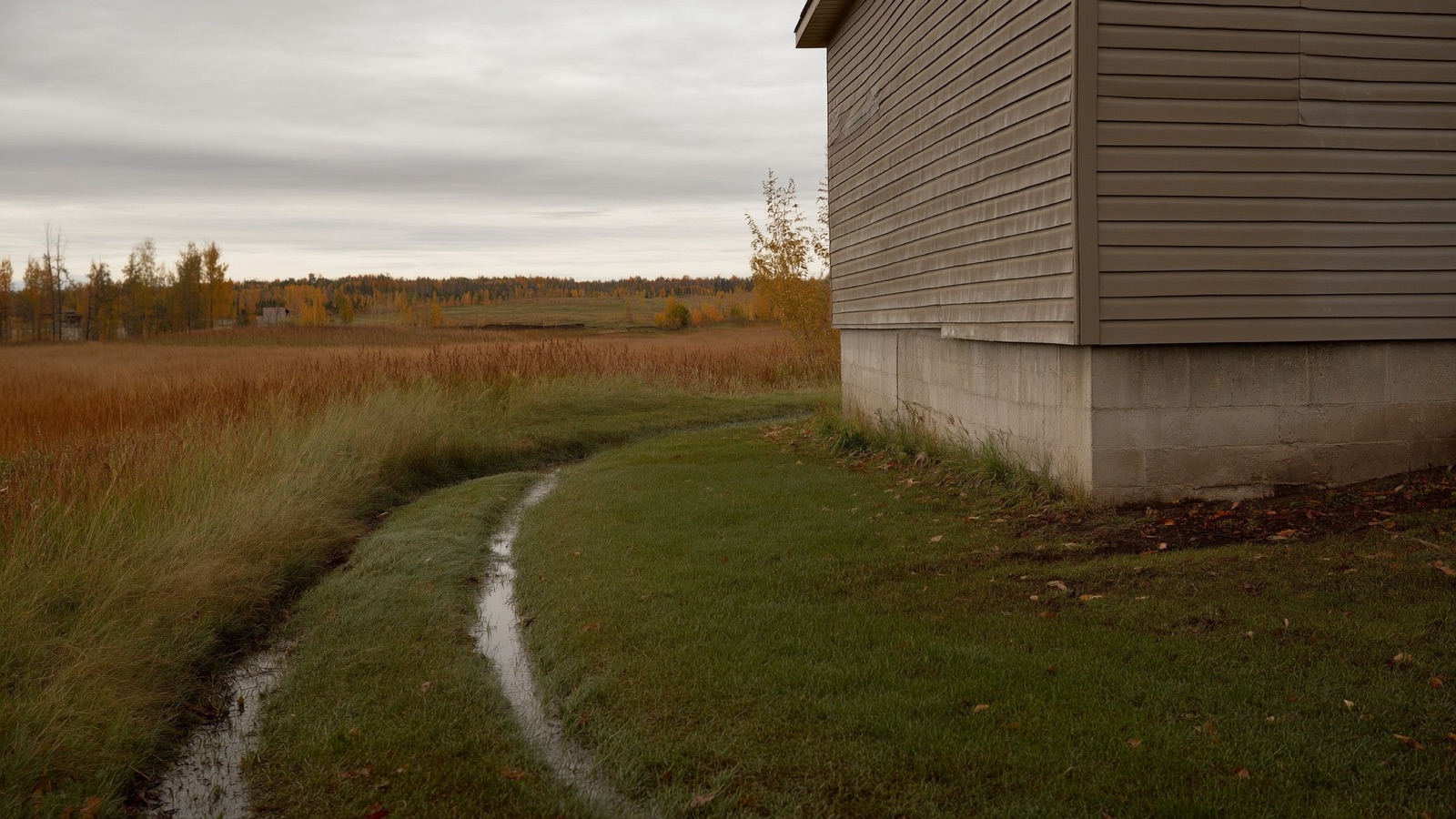
Start on the high side of the property and work toward the house. Look for a driveway edge, neighboring slope, field, outbuilding roof, or broad lawn that collects runoff before it reaches the foundation. Then follow the path past downspouts, window wells, patios, walks, and low planting beds.
University of Minnesota Extension recommends checking gutters, downspouts, and surface grading before moving to more invasive basement drainage work. Its basement moisture guide also notes that backfill beside a house can settle and direct water toward the wall.
Useful signs include:
- Bare channels or deposited soil after a storm
- Mulch, edging, or a walkway holding water beside the house
- Downspouts that empty into a low area
- Snow drifting or melting against one wall
- A sump pump that runs hardest during rain or thaw
- Dampness that appears only on the uphill side
Corrective grading can redirect surface water when the route and outlet are safe. It cannot stabilize a moving wall or repair failed footing drainage by itself.
Separate Drainage Symptoms From Structural Movement
A wet wall does not prove structural failure, and a dry crack does not prove the wall is stable. Evaluate the two questions separately.
Water evidence includes staining, efflorescence, damp mortar joints, wet window wells, and moisture that follows rain or snowmelt. Movement evidence includes widening cracks, horizontal displacement, bowing, uneven floors, or changes around doors and windows. Dated photographs from the same locations are more useful than a single measurement without history.
If movement is present, the inspection should determine whether the condition belongs to the wall, footing, slab, or surrounding soil before a foundation repair method is selected. If water is the main problem, the sequence may begin with roof discharge and grading, then move to footing or drain tile evaluation if moisture continues.
Protect Well, Septic, and Drainage Areas Before Work
Large-lot repair planning must account for buried systems. Do not assume an open part of the yard is a safe place for excavation, imported fill, equipment traffic, or a new swale.
Washington County’s septic system program provides permits, inspections, and a portal for existing records. The county requires permits for a new system, repair or replacement, and certain building-use changes. Those records can help identify the known system layout, but field verification may still be necessary before work begins.
The City of Lake Elmo also regulates some grading. Its current permit guide lists triggers that include moving more than 50 cubic yards outside a building permit, work in a wetland, floodplain, or shoreland district, and drainage changes that place additional water on another property. Confirm the rules for the exact parcel and scope before changing a swale or outlet.
Build the Repair Plan in the Right Order
- Document the symptom. Record when moisture or movement appears and whether it changes with weather.
- Map the property systems. Locate known drainage routes, well and septic components, utilities, driveways, and outbuildings.
- Identify the water source and outlet. A plan is incomplete if it moves water away from the house but creates erosion, ponding, or a neighbor problem elsewhere.
- Separate surface work from structural work. Regrading, drain tile, crack repair, and wall stabilization solve different problems.
- Confirm permits and buried conflicts. Check city and county requirements before excavation or material movement.
This order produces a repair boundary based on evidence. It also reduces the risk of paying for an interior system while roof and surface water continue to load the foundation from outside.
Extended Recap: Treat the Property as One Water System
Foundation care on a Lake Elmo acreage begins beyond the basement wall. Rural land uses, large lots, wells, septic systems, shallow depressions, hard surfaces, outbuildings, and site-specific grading can all shape how water reaches a house. None of those factors proves a foundation failure by itself. The useful diagnosis separates water entry from structural movement, then connects both to the actual property.
Start with records, dated observations, and a top-to-bottom water-path review. Correct roof and surface drainage where appropriate, protect buried systems, and confirm that any new outlet is lawful and safe. If cracks, displacement, or recurring moisture remain, Concrete & Foundation Solutions provides free inspections for Lake Elmo homeowners. Call 651-364-4400 to review the house and site together.
About the Author
Concrete & Foundation Solutions is based in Woodbury and serves Lake Elmo and the Twin Cities East Metro. The company evaluates foundations, concrete, grading, and drainage conditions, then recommends work based on the cause and extent found at the property.
Related Articles
Related Services
Have a Foundation Concern?
Get a free, honest inspection from a local team with 20+ years of Twin Cities experience.
Call 651-364-4400