
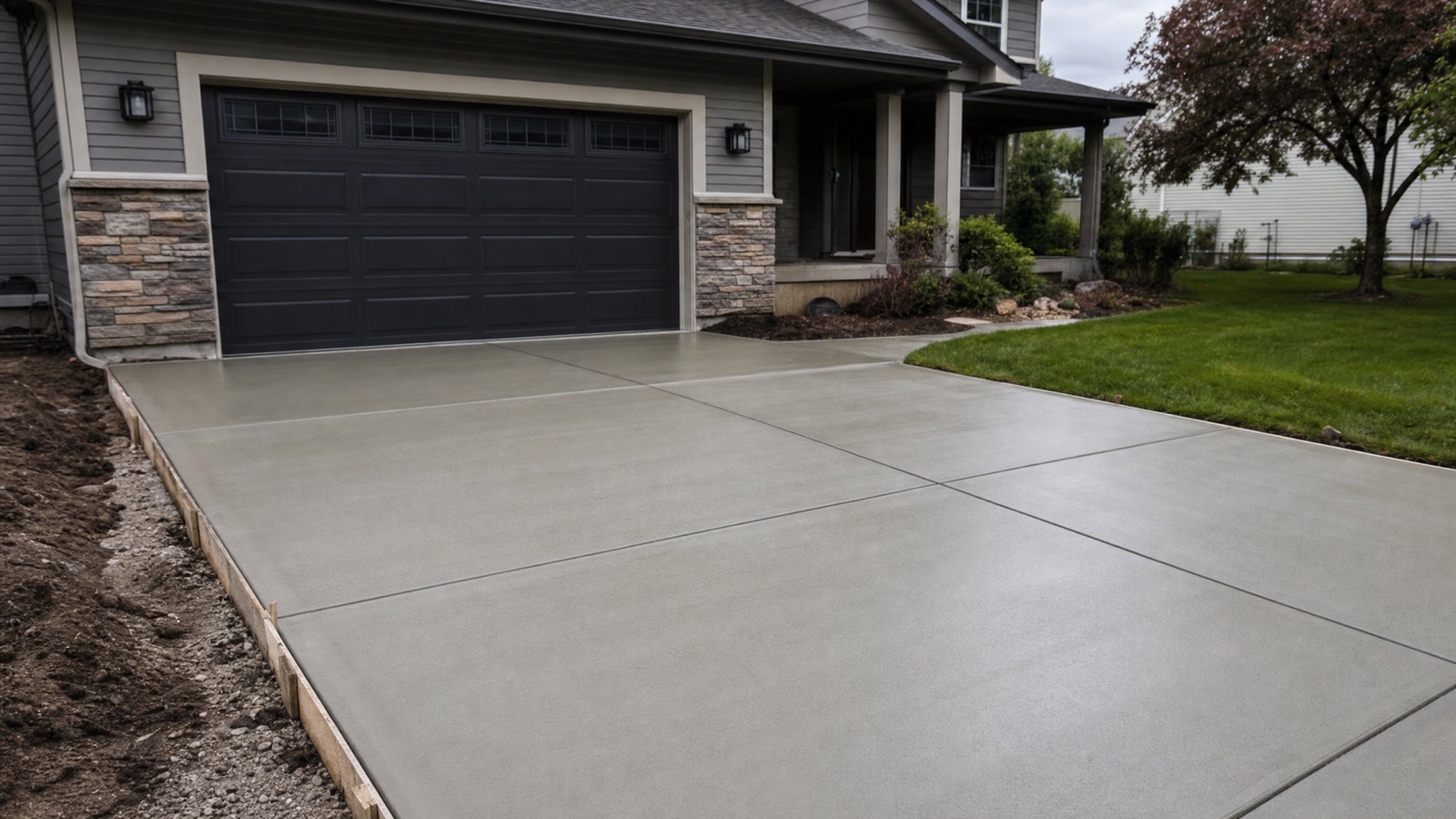
Minnesota winters do not give concrete driveways much grace. The freeze-thaw cycle that defines our climate expands water in every small void, forces slabs to heave and settle, and eventually breaks down even well-installed concrete. If your driveway is showing signs of serious deterioration, this guide will help you understand whether you need repair or full replacement, what the process involves, and what factors affect cost.
Repair vs. Replacement: How to Read Your Driveway
Not every cracked driveway needs to come out. The key is knowing which problems are surface-level and which ones indicate that the slab or the base beneath it has failed.
Signs repair may be enough:
- Hairline or narrow cracks that have been stable for more than one season
- Minor surface scaling in isolated spots
- A single control joint that has widened slightly
Signs replacement is the better call:
- Heaving. When frost pushes sections of slab up unevenly, the base has been compromised. Grinding down high spots is a temporary fix at best.
- Deep or widening cracks. Cracks that have grown across multiple winters, or that are wide enough to catch a finger, signal structural failure in the slab.
- Large-scale spalling. Spalling is the flaking or pitting of the surface layer. A little at the edges is common. When it covers a significant portion of the slab, the concrete has absorbed enough de-icer and water damage that the surface cannot hold.
- Significant settling. Sections that have dropped below the surrounding grade create drainage problems and trip hazards. If the base soil has shifted, the slab above it will continue to settle after any repair.
If you are unsure, call us at 651-364-4400 for a free estimate and an honest read on what your driveway actually needs.
The Replacement Process
A quality concrete driveway replacement is not just a matter of pouring new concrete over the problem. The work that happens before the pour determines how long the new slab will last.
1. Demolition and removal. The existing slab is broken up and hauled off. This is physical, equipment-intensive work that sets the stage for everything that follows.
2. Base preparation. This step is where Minnesota driveways succeed or fail. A properly graded and compacted aggregate base, typically 4 to 6 inches of Class 5 gravel, gives the slab a stable, well-draining foundation. Poor base prep is the most common reason driveways fail prematurely. In some situations, corrective grading is needed to address drainage issues before the base goes in.
3. Forming. Wood or steel forms define the shape and thickness of the finished slab. Residential driveways in Minnesota are typically poured at 4 inches minimum, with 5 to 6 inches recommended for areas that see heavy vehicles.
4. The pour. Concrete mix matters here. For Minnesota conditions, air-entrained concrete is standard. Air entrainment introduces microscopic bubbles into the mix that give water room to expand during freeze-thaw cycles without cracking the slab. Skipping this in favor of a cheaper mix is a mistake that shows up within a few winters.
5. Finishing and control joints. Control joints are intentional score lines tooled into the surface that guide where the concrete will crack as it shrinks during curing. Placed correctly, they keep cracks from running randomly across the slab. Finishing texture is also applied at this stage.
6. Curing. Concrete does not dry; it cures through a chemical process that requires moisture and temperature management. Covering the slab with curing blankets or applying a curing compound protects the surface during this critical window.
Timing in Minnesota
The practical window for exterior concrete work in the Twin Cities and East Metro runs from roughly May through September. You want soil temperatures and air temperatures consistently above 50 degrees Fahrenheit during placement and for at least a week afterward.
Pouring too early in spring risks frost events that damage freshly placed concrete. Late-season pours can be done with precautions, but late October and beyond carries real risk. Most reputable contractors will not pour flatwork when cold weather is forecasted within the curing window.
If you are planning a driveway replacement, schedule consultations in late winter or early spring. Contractors book up quickly once the ground thaws.
Cure and Use Timeline
- Walk on it: 24 to 48 hours after pour
- Light vehicle traffic: 7 days minimum
- Full structural cure: 28 days
Avoid de-icers on new concrete for the first full winter. Sand is a safer option for traction. Many de-icing products accelerate surface scaling on concrete that has not had adequate time to cure fully through a freeze-thaw season.
What Affects Cost
Concrete driveway replacement cost varies based on several factors. We give ranges and factors rather than invented totals because an accurate number requires seeing your specific site.
- Square footage. Larger driveways cost more. A standard two-car driveway runs roughly 400 to 600 square feet, but layouts vary considerably.
- Slab thickness. Going from 4 to 5 or 6 inches adds material and labor cost, and is often worth it for longevity.
- Base condition. If the existing base material needs significant regrading or replacement, that adds to the scope. See corrective grading for more on what this involves.
- Demo and haul-off. Breaking out and disposing of the old slab is part of the job and is included in any honest estimate.
- Decorative options. Exposed aggregate, stamped patterns, and colored concrete all add cost above a standard broom-finished slab. They also add visual appeal and can increase property value.
- Access and site conditions. Tight access for a concrete truck, significant grade changes, or areas requiring hand-pouring can affect the final number.
For an accurate estimate on your specific driveway, contact us or call 651-364-4400. We serve Woodbury, the East Metro, and the St. Croix Valley, and we have been doing this work for over 20 years.
Explore our full range of concrete services to see what else we can help with.
Related Services
Have a Foundation Concern?
Get a free, honest inspection from a local team with 20+ years of Twin Cities experience.
Call 651-364-4400